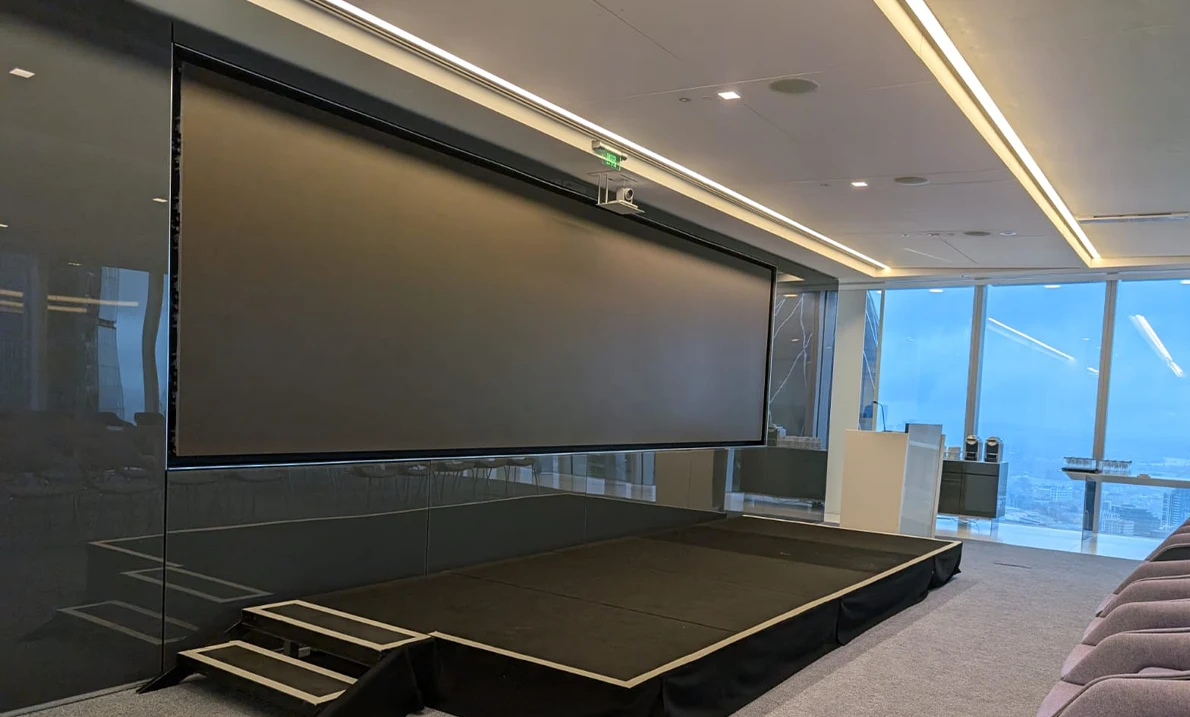
For smaller gatherings of under 50 guests, a 3 m × 2 m stage about 6–8 inches high works well. For mid-sized events (50–200 people), aim for 4 m × 3 m and 40–60 cm high. Large audiences of 200 or more need at least 6 m × 4 m and 60–100 cm in height for perfect visibility and balance.
Walk into any event, a London awards night, a corporate launch, a local concert, and the stage sets the mood before the first word is spoken. It’s the visual anchor, the heartbeat of the room. Yet many organisers still ask the same question: what size stage should you hire to make everything look and feel right?
Too small, and your speakers or band feel boxed in. Too large, and you lose intimacy and connection. Choosing correctly isn’t just about numbers on paper; it’s about proportion, safety, and experience.
Across the UK, most stage hire companies (from London specialists like EMS Events to regional providers) agree that size depends on three main elements: audience, venue, and performance type.
Let’s break that down clearly.
WHY STAGE SIZE CAN MAKE OR BREAK AN EVENT
Because scale controls how people see, hear, and feel your event.
A well-chosen stage balances practicality and design. It keeps sightlines clean, helps lighting behave predictably, and makes transitions smooth for crew and performers alike.
When the stage fits the room, audiences focus effortlessly. When it doesn’t, even perfect sound and décor can’t save the impression. Stage size quietly decides whether your event feels confident or improvised.
AUDIENCE SIZE – THE FIRST MEASURE OF SCALE
Larger audiences need proportionally larger stages. It’s simple optics.
A small 3 m × 2 m platform can carry a single presenter in a meeting room, but once you pass a hundred guests, that same space feels cramped.
For 100–150 attendees, most UK production planners choose roughly 4 m × 3 m.
For 200 people or more, 6 m × 4 m gives enough width for panels, props, and presenters to move naturally.
Keep height in mind: a 60 cm rise ensures those at the back see clearly without neck strain.
For standing crowds or concerts, go higher, up to 1 m if ceiling clearance allows. In long halls, every extra 100 people usually means adding 1 m of stage width.
VENUE DIMENSIONS – LET THE ROOM DECIDE
Every venue tells its own story. A stage that looks elegant in a London ballroom might overpower a community theatre. Before hiring, measure three things: room width, ceiling height, and usable depth.
Low ceilings or chandeliers instantly limit height. That’s why rental companies ask for “clearance to the lowest fixture,” not just total height. In spaces with high ceilings, bigger stages feel more natural and leave room for lighting trusses or screens above the set.
A good rule: keep at least one-third of the total room width clear around the stage for audience flow, camera angles, and safety barriers.
If your ceiling is under 3 metres, never exceed 40 cm stage height, you’ll blind guests with lights and crush the sense of space.
PERFORMERS, PANELS, AND PROPS – WHO’S ON STAGE?
The type of content often matters more than the crowd size.
A single keynote speaker needs little more than a lectern, mic, and monitor. A band, however, brings amplifiers, drums, and stands; suddenly, that compact stage disappears.
For a four-piece group or multiple panellists, extend depth to at least 4 m and provide safe steps or ramps on either side. If dancers or product demos are involved, increase by another metre front-to-back for movement.
Always allow 1 m of free space behind performers for technicians and cables. You’ll thank yourself later.
STAGE HEIGHT – VISIBILITY AND COMFORT IN ONE NUMBER
Height is the unsung hero of staging.
- Go too low, and the back rows see nothing but heads.
- Go too high, and the front rows crane upwards uncomfortably.
For reference:
- 15–20 cm (6–8 inches): Small meetings and private dinners.
- 40–60 cm: Most conferences and indoor corporate events.
- 60–100 cm: Concerts, galas, and wide seated audiences.
Higher stages demand guardrails and handrails for health and safety compliance. And remember: every step or ramp counts as part of the overall footprint, so allow extra length accordingly.
SEATING LAYOUT AND AUDIENCE SIGHTLINES
The wider or deeper the room, the taller the stage.
Layout transforms how a space feels. In long, narrow rooms, raise the platform so those at the back stay connected. In wide venues, rely less on height and more on AV support, repeater screens or side projection to maintain eye contact from every seat.
Banquet layouts absorb sightlines with tall table décor. Lift the stage slightly higher than for theatre seating. For hybrid events, camera risers should match or exceed stage height to avoid blocking views.
Always test visuals from the farthest chair before doors open. Adjusting later usually means re-rigging lights and cameras.
LIGHTING, RIGGING & BACKSTAGE SPACE
A stage is only as effective as what surrounds it. Lighting trusses, scenic flats, or hanging décor eat valuable metres fast. Plan for at least 1.5 m of clearance behind your backdrop to hide cabling and give technicians freedom to move.
Ask your provider about rigging weight limits; not all venues allow overhead suspension. If you’re setting up in hotels or heritage sites, ground-supported lighting is often safer.
Sketch your full set-up to scale. It’s the easiest way to spot where lights, projectors, or camera tripods may clash with stage edges.
BALANCING AESTHETICS WITH SAFETY
Looks matter, but structure comes first.
All portable stages in the UK must meet load-bearing and slip-resistance standards. For events with heavy equipment or multiple performers, confirm the maximum distributed load with your hire company.
Ensure edges have safety rails if over 60 cm high, and ramps meet accessibility codes (1:12 slope minimum).
Reputable London suppliers like EMS Events provide modular decks that lock together securely and are fully certified for weight and stability.
Avoid covering access points with carpet or branding panels; technicians need clear routes during emergencies.
STAGE DESIGN – WHERE FUNCTION MEETS FEEL
Beyond size, design creates emotion. Curved fronts soften corporate settings. Split-level risers add drama for product reveals. Transparent acrylic decks add sparkle for fashion or music shows.
When integrating screens or LED walls, account for throw distance; screens that are too close will overwhelm speakers. Lighting colour temperatures should match camera profiles for consistent streaming quality.
Keep branding simple and high contrast. A clean fascia panel, photographed well, does more for sponsors than cluttered logos.
TECHNICAL COORDINATION – THE INVISIBLE ART
A perfect stage still fails without perfect timing.
Coordinate your event production team early: sound engineers, lighting designers, and camera directors all rely on stage geometry.
If the stage moves mid-show (for set changes or awards flow), rehearse transitions under show lighting.
Good event companies now offer 3D visualisation software, letting you preview stage layouts virtually before build day. That single step prevents costly on-site rework.
TIPS FOR EVENT SUCCESS BEYOND SIZE
A few golden rules make every stage feel intentional:
- Match form to function. A conference needs clear sightlines; a concert needs presence.
- Allocate zones. Keep control desks and rigging separate from seating.
- Respect proportions. A stage should rarely exceed one-fifth of the total room area.
- Plan rehearsals under show lighting. Shadows behave differently once audiences fill the room.
- Check power distribution. Lighting and sound draw differently; poor cabling risks outages mid-event.
| Pro Tip: Bring your staging provider to the site visit. They’ll spot floor slopes, door widths, and load-in paths you might overlook. |
COMMON MISTAKES TO AVOID
We see them every season:
- Book the staging before confirming the venue layout.
- Forgetting backstage storage or green-room access.
- Ignoring rigging height restrictions in historic venues.
- Choosing carpet colours that clash under LED lighting.
Each issue sounds minor until build day. A few early questions save hours later.
CHOOSING THE RIGHT PARTNER
When researching portable stage hire across the UK, look for experience, modular systems, and full technical support.
Companies such as EMS Events (London) handle both staging and AV equipment hire UK, ensuring lighting, sound, and structure work together.
Good partners don’t just deliver platforms; they guide design, calculate loads, and remain on-site throughout your event. Ask for safety certificates, previous case studies, and CAD plans before booking.
Request a pre-event inspection. Reliable suppliers will measure and verify the venue before committing final dimensions.
TO PEN DOWN
Your stage isn’t just a platform; it’s the lens through which your entire event is seen.
Choose wisely, and every detail, from the first welcome to the final applause, feels polished and intentional.
So, what size stage should you hire? Small gatherings thrive on a 3 m × 2 m riser.
- Mid-size conferences shine on 4 m × 3 m platforms about half a metre high.
- Major events need 6 m × 4 m or larger with up to 1 m of elevation.
- More important than the numbers, though, is balance: between design and safety, space and intimacy, ambition and practicality.
If you’re planning a conference, concert, or awards night anywhere in the UK, consult a professional staging provider, like EMS Events in London, for tailored advice, safety checks, and seamless production.
Get the size right, and your event will not just look professional; it will feel unforgettable.
FAQs
WHAT STAGE SIZE FITS 100 GUESTS?
Around 4 m × 3 m, about 50 cm high, provides ideal visibility and space for small panels.
HOW HIGH SHOULD MY STAGE BE FOR A CONFERENCE?
Between 40 and 60 cm keeps the presenter at eye level with most audiences.
CAN I RENT CURVED OR TIERED STAGING?
Yes, most modular systems allow semicircle or multi-level builds for awards and fashion shows.
DO HIRING COMPANIES INCLUDE LIGHTING AND AV?
Many, including EMS Events, provide integrated production packages combining staging, lighting, and audio.
HOW FAR AHEAD SHOULD I BOOK?
Aim to book 4–6 weeks in advance, especially in peak London season from May to October.