Skip to content
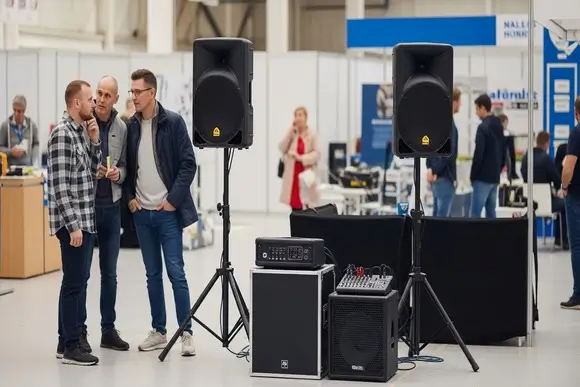
To choose the right PA system, assess your event’s size, venue, and audio needs to match the required power, number of speakers, and components. For small events (under 50 people), a basic system with a couple of speakers is sufficient; for medium events (50-200), a more robust setup with multiple speakers and a subwoofer is recommended; and for large events (over 200), a professional-grade system with multiple speakers, subwoofers, and advanced mixing is necessary. Other key factors include indoor vs. outdoor location, the type of event (e.g., speeches vs. live music), and budget.
When you’re managing corporate events, conferences, activations, or brand experiences, you already know how crucial reliable sound is. Poor audio doesn’t just frustrate guests; it damages attention, credibility, and the perception of your brand or your client’s brand.
If you pick the wrong one, people might struggle to hear, feel the sound is weak, or think the event is less professional. Using simple logic and the right setup helps you match your gear to your audience size, avoid waste, and ensure every guest hears clearly.
What Is a PA System and How Does It Work?
A PA (public-address) system is made up of speakers, microphones, a mixer, and cables. It amplifies sound so that a room full of people can hear clearly.
Simply put, a PA system takes voices or music and makes them loud enough for the room and audience. According to one guide, components like speaker size, power (in watts), and mixer complexity all change depending on the size of the venue.
When the audience is small, you may only need two speakers and a basic mixer. As venue size, guest number, and performance complexity increase, you’ll need more powerful speakers, subwoofers (for bass), and many more microphone inputs.
Understanding what the system does and how the parts work together helps you pick the right one instead of guessing.
How Event Size Affects Your PA System Choice
If you have more people or a larger room, you’ll need more speakers, greater power output, and likely a bigger mixer.
When you plan for different event sizes, you’re really planning for how far sound needs to travel and how clear it needs to remain. A guide explains that a venue for a solo performer is very different from a venue for a band with many instruments.
So, if your guest list is small and the room compact, you pick a lighter system. If you have more than 200 people in a hall or outdoor space, the demands rise quickly: more speakers, better placement, and audio tech to deal with echo and delay. The size of your audience and the room shape drive your PA system choice.
PA System for Small Events (Up to 50 People)
For up to about 50 guests in a small indoor space, two active speakers and one microphone are usually enough.
Small events like workshops, meetings, and private receptions don’t need huge rigs. You might choose a pair of powered speakers, one mic, and a basic mixer. One London-hire provider lists basic systems starting around £80 per day for up to ~80 people.
You don’t need subwoofers or line arrays here. You focus on clarity and coverage: all voices need to be heard, not necessarily a powerful bass. This is cost-effective and avoids over-gearing that might cause sound issues in a small space.
PA System for Medium Events (50–200 People)
Medium events usually require 2–4 speakers, possibly a subwoofer, multiple microphones, and a small digital mixer.
In this range, weddings, mid-sized corporate events, and receptions, the demands jump. You might be in a room of 150 people, with music and speeches. So you’ll need stronger speakers, maybe a subwoofer for music, multiple mic inputs, and a mixer that can balance different sources.
Hire cost data in London shows these setups typically rent for around £150 to £350 per day for sound systems in this category.
Placement of speakers and understanding acoustics matter more. You may also want a technician just to monitor sound levels during performances or speeches.
PA System for Large Events (Over 200 People)
For 200+ guests or big conference rooms, you’ll need powerful speakers (line arrays), large mixers, many mics, and likely a sound engineer.
Large events, big halls, outdoor venues, and conferences bring bigger audio challenges. According to a London hire cost guide, large sound systems can range from £500 to £1,500 per day, while top-end concert setups run from £2,000 to £10,000+.
These events often need line array systems (to cover large audience areas), subwoofers (for full frequency coverage), wireless mic banks (for presenters/multiple people), and an audio engineer to manage everything. Failure to handle this can lead to low audibility, echo, or uneven sound across the venue.
PA Systems for Outdoor Events
Outdoor events need more power and coverage since sound dissipates in open air. You’ll likely need extra speakers and subs.
When you move outside, things change. There are no walls or ceilings to reflect sound, so you need more speaker coverage and careful placement. One guide emphasises that outdoor setups must often use more powerful systems to deliver the same clarity as indoor venues.
You may also need power supply solutions (generators, long cables), weather-proofing, and extra staging. Budgets should reflect these added requirements.
When Do You Need a Sound Engineer?
You should hire a sound engineer if you have multiple microphones, music performances, live speeches, or a large audience, because they keep the audio consistent and professional.
A sound engineer’s job is to monitor sound, prevent issues like feedback or distortion, and adjust levels in real time. Even the best equipment can perform poorly without proper management.
For a simple speech in a small room, you may manage with a basic setup yourself. But for weddings, live bands, or hybrid events, an engineer adds value. Many hire companies list engineer rates starting around £200–£400 per day.
Hiring an engineer might add cost, but it often prevents bigger problems and protects your event experience.
Key Features to Look for When Choosing a PA System
When choosing a PA system, look for sufficient power (watts), enough speaker coverage, mixer inputs, and reliable microphone options.
Here are the features you should check:
- Power rating: The system must have enough wattage for your audience size. One guide says you should pick at least a little bigger than you think you’ll need.
- Coverage area: The speakers must reach all parts of the venue so no one misses the audio.
- Inputs and connectivity: Check how many mics or sources you’ll have.
- Wireless mic compatibility: For freedom of movement.
- Portability and setup: If venue access is tight, you’ll want lighter gear.
- Brand and quality: Trusted brands often cost more, but their reliability pays off.
Common Mistakes People Make When Choosing a PA System
The most common mistake is selecting a system that’s too weak for the room, leading to poor sound that distracts from the event.
Other mistakes include:
- Ignoring room acoustics (hard surfaces cause echo).
- Poor speaker placement (leading to uneven sound).
- Skipping a test and sound check.
- Not budgeting for a technician or delivery cost.
Source guidance explains that speaker placement and layout are critical to the performance of a PA system.
Avoiding these mistakes helps make sure your event doesn’t suffer from audio issues.
So, Make Your PA Choice Simple and Effortless
Match your PA system to audience size, venue type, and complexity, and you’ll pick a system that fits your needs and budget.
Choosing the right PA system doesn’t need to be complicated. Start with: how many guests, what will they hear (speech vs music), indoors or outdoors? Then pick a system sized to match.
For example:
- Up to 50 people: basic system.
- 50–200: medium system with multiple speakers.
- Over 200: a large system with line arrays and a technician.
Rental cost data from London confirms these general tiers.
If you want professional support and a tailored solution, EMS Events can help you to hire the right PA system for your event size, venue, and budget, ensuring you’re heard clearly and confidently.
FAQs
What size PA system do I need for 50 people?
A basic system with two powered speakers and one microphone is often sufficient.
Do I need subwoofers if I only have speeches?
No. Subwoofers are more important for full band or dance sections. For speech-only events, you may not need them.
Is wireless better than wired microphones?
Wireless gives flexibility of movement but costs more and needs careful setup. Wired is reliable and cost-effective for static presenters.
Can I use the same PA system indoors and outdoors?
Technically, yes, but you’ll likely need more power and speakers outdoors due to open space and lack of walls.
How many speakers do I need for a wedding?
It depends on room size and number of guests. For 100–150 people, a setup with 2–4 speakers and a subwoofer is a good starting point.
Should I buy or rent a PA system for my event?
If it’s a one-off event, renting is usually smarter: you save on cost, storage, and maintenance and get the right equipment for the size of the event.