Skip to content
There was a time when live streaming felt like an optional extra for events.
Now, it is much closer to a strategic marketing tool.
If you are already investing in the venue, speakers, AV, staging, branding, logistics, and promotion, it makes sense to ask a simple question: why should all of that value only reach the people in the room?
That is where streaming your event is one of the smartest marketing moves you can make because it helps one live event do far more work. It allows more people to attend remotely, gives your team a bank of reusable content, supports registration-led lead capture, and turns a single event into an asset that can keep creating value after the room is cleared.
Here are the proven reasons it belongs in your event strategy.
YOUR EVENT SHOULD NOT END AT THE VENUE DOOR
A lot of businesses still treat events as one-day moments.
The event happens, guests arrive, the speakers deliver their sessions, and then by the next day, most of the value has already started to fade. If nothing has been captured properly, all that planning and investment leaves behind very little beyond a few photos and a post-event email.
Streaming gives the event a second life.
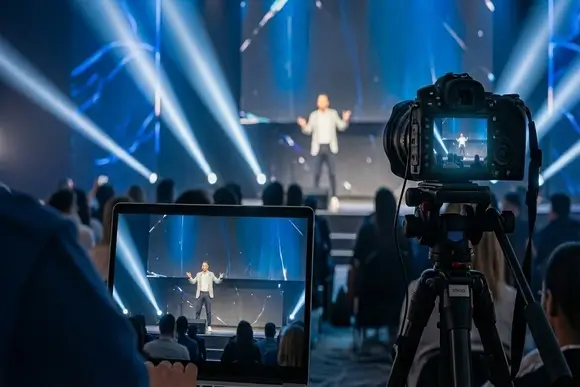
It allows remote audiences to join in real time. It creates a recording that can be reused later. It makes it easier to keep the message moving after the live experience has finished. Instead of the event being a single moment, it becomes part of your wider content and marketing system.
That is one of the biggest mindset shifts brands need to make. Streaming is not only about access. It is about extending the useful life of the event itself.
| 134% average increase in audience reach when events include a virtual streaming element | 83% of event organisers report significantly larger audiences with live streaming | 10–20× longer average viewing time for live video vs pre-recorded content |
1. STREAMING EXPANDS YOUR AUDIENCE BEYOND THE ROOM
Every venue has a capacity limit. Your message does not have to.
The obvious advantage of streaming is that it allows more people to attend without needing a larger venue or a second event date. Stakeholders in other offices, international clients, media contacts, partners, and internal teams who cannot travel can still join in real time.
This is especially valuable for conferences, AGMs, seminars, and launches where interest often goes beyond the guest list.
For marketing teams, this wider reach matters because awareness is only useful if people can actually access the event.
2. IT HELPS YOUR EVENT BUDGET WORK HARDER
Events are expensive.
Even a relatively straightforward corporate event can involve a meaningful investment in time, people, production, and promotion. If all of that value only reaches the live room, your return is naturally limited to the audience who managed to attend in person.
Streaming makes the same investment work harder.
It allows one event to serve both the live audience and the remote audience. It creates a recording that can be used later in sales follow-up, email campaigns, landing pages, thought leadership content, or internal communications. It also reduces the pressure to repeat the same session for different groups when one well-produced, streamed event can do the job once, properly.
From a commercial point of view, this is one of the strongest arguments for streaming: it increases the output of an event without requiring a second event budget.
3. STREAMING GIVES YOUR MARKETING TEAM REUSABLE CONTENT
This is the point many businesses still miss.
A strong streamed event does not just produce a replay link. It produces content assets.
A keynote can become short LinkedIn clips. A panel discussion can be turned into blog content or an email series. A product demonstration can support sales conversations after the event. A speaker Q&A can inform future FAQs, articles, and follow-up materials.
In other words, one streamed event can feed your content calendar long after the live audience has gone home.
That is why professionally captured streaming matters. A poor recording has limited reuse value. A well-produced stream, with clear audio, clean visuals, and proper switching between speakers and presentation content, becomes a usable marketing asset rather than just a record of what happened.
WHAT ONE STREAMED EVENT ACTUALLY GIVES YOUR MARKETING TEAM:
| What You Capture | Where It Goes | Marketing Value |
| Full session recording | Website on-demand page / YouTube. | Evergreen SEO asset; replay for absent delegates. |
| 60–90 sec highlight reel | LinkedIn, Instagram, X (Twitter). | Social proof drives sign-ups for the next event. |
| Speaker soundbites (15–45 sec) | YouTube Shorts, Reels, TikTok. | High engagement feeds the platform algorithm for weeks. |
| Key stat or quote card | LinkedIn carousel, X thread. | Thought leadership content: highly shareable. |
| Full session transcript | Blog post, whitepaper, Help Centre. | Keyword-rich SEO content positions the brand as an authority. |
| Live Q&A section | FAQ page, email nurture sequence. | Answers buyer objections; shortens the sales cycle. |
| Audience poll results | Infographic, press release, social post. | Data-led content with PR and media coverage potential. |
| Speaker clips + intro graphics | Pre-event promo for next conference. | Re-engagement of registered audience; social proof. |
4. IT SUPPORTS LEAD GENERATION AND FOLLOW-UP
Streaming is not only about visibility. It can also support lead generation.
If viewers register to access your stream, that creates a natural point of data capture. Depending on the platform and setup, you may also be able to measure attendance, on-demand views, engagement activity, poll responses, questions, or downloads.
That information can be genuinely useful for sales and marketing teams, especially when the event is designed around a specific audience segment or business topic.
EMS Events hybrid and virtual production work can include platform selection, AV, streaming, content delivery, and technical support, which matters because lead capture and audience analytics often depend on choosing the right platform from the start.
5. IT IMPROVES ACCESSIBILITY AND CONVENIENCE
Not everyone who wants to attend your event can realistically get to the venue.
Some people are in a different city. Some are working remotely. Some have limited travel budgets. Others may benefit from attending online for accessibility, schedule, or wellbeing reasons.
Streaming removes many of those barriers.
It gives people a way to take part without travel and helps brands create events that are more inclusive and flexible. That is also one reason hybrid event production continues to matter.
This is not just a practical benefit. It also reflects well on the brand. It shows that you are thinking about how people actually attend events today.
6. IT CAN INCREASE SPONSOR VALUE
If your event has sponsors or partners, streaming creates more inventory.
A sponsor is no longer only visible to the people in the room. Their branding can appear in the live stream, the replay, the registration environment, on-screen graphics, holding slides, and post-event clips. That gives sponsors more impressions and a longer tail of visibility than a room-only event can offer.
For event organisers, this can strengthen sponsorship conversations because you are not only selling a live audience. You are selling extended exposure across live, remote, and on-demand formats.
This is one of the most commercially useful points in your draft, and it is worth keeping because not many blogs explain it clearly.
7. IT SUPPORTS THE HYBRID EVENT STRATEGY PROPERLY
Many brands do not want to choose between a room-only event and an online-only event.
They want both.
That is exactly where hybrid comes in. A hybrid event lets you keep the atmosphere and relationship-building of an in-person event while still opening the experience to remote attendees.
Some event production companies, like EMS Events, offer end-to-end support covering platform choice, streaming, AV, content delivery, and technical management for conferences, AGMs, fundraisers, seminars, and product launches.
The important thing is that a hybrid only works well when the remote audience is treated as a real audience, not as an afterthought. That usually requires better production planning, clearer content design, and more deliberate technical execution than a simple room-only event.
8. IT CAN SUPPORT SUSTAINABILITY GOALS
This section in your paste is worth keeping, but it should be phrased carefully.
Streaming does not make an event automatically “green,” but it can help organisations reduce the travel impact linked to attendance by allowing some participants to join remotely. For businesses with sustainability targets, that can be a practical advantage.
A hybrid or streamed approach may help expand event reach without increasing travel at the same rate. That is a more measured, credible claim than treating streaming as a blanket sustainability solution.
9. THE ANALYTICS LAYER: INTELLIGENCE MOST EVENT TEAMS NEVER USE
At a physical event, you get a headcount and a feedback form. That’s roughly where your audience intelligence ends. You know who came. You don’t know what held their attention, which speaker prompted a wave of note-taking, or which session sent the back rows quietly checking their phones.
Stream the same event, and the data picture changes entirely.
- Engagement heatmaps show exactly where viewership peaked, where it dipped, and what content drove the longest watch times.
- Drop-off analysis identifies the precise moment remote viewers leave and helps you understand why, which is useful intelligence for planning the next event’s running order.
- Poll and Q&A response data show which questions resonated, which topics generated the most interaction, and which concerns your audience actually has.
- Geographic and device data show where your remote audience is watching from, which devices they are using, and when they are tuning in. This is valuable for future targeting and scheduling decisions.
- Replay engagement to determine which sections of the on-demand recording are watched most, and who is returning to watch specific segments.
This is not just post-event reporting. It’s marketing intelligence. It tells your content team what to write about next, your sales team which topics are generating the most interest, and your events team how to structure the next agenda. A well-streamed event becomes one of the richest data sources in your marketing toolkit.
10. LIVE STREAMING BUILDS BRAND AUTHORITY THAT OUTLASTS THE EVENT
When your organisation consistently streams its events, conferences, panels, thought leadership talks, and product demonstrations, you build a visible, searchable record of your expertise. You show, repeatedly and publicly, that you have things worth saying, people worth hearing from, and ideas worth an audience’s time. That compounds. It accumulates into the kind of brand authority that a social media presence and a well-designed website cannot replicate.
Consider what a prospective client sees when they research your organisation. A services page and some case studies signal competence. A library of professionally produced event recordings, real speakers, real discussions, and real audiences engaging with real ideas signals a different category of credibility entirely.
WHAT BUSINESSES GET WRONG ABOUT STREAMING
The biggest mistake is thinking that streaming is just a camera and an internet connection.
It is not.
A weak stream reflects badly on the brand very quickly. Poor sound, stuttering visuals, awkward framing, unreliable connectivity, or a confusing viewer experience can make the event feel less professional rather than more effective.
That is why streaming works best when it is treated as a proper production job. EMS Events live streaming and webcasting services come with delivery, dedicated account management, support for a range of event types, and solutions personalised to the audience and event format.
A good event stream needs:
- Reliable audio.
- Strong camera coverage.
- Clear switching between speakers and presentation content.
- Branded graphics that support the viewing experience.
- Stable connectivity.
- Rehearsal and technical checks.
- A viewing experience that feels intentional.
A SIMPLE CHECKLIST BEFORE YOU DECIDE TO STREAM
Before you commit, ask these questions:
- Who needs to see this event beyond the room?
- Could the recording be useful after the live date?
- Do we want registrations or viewer data?
- Would sponsors benefit from remote visibility, too?
- Does this event need a hybrid option?
- Are we set up to deliver a professional viewer experience, not just a basic feed?
If the answer to even two or three of those is yes, streaming is probably worth serious consideration.
FINAL THOUGHT
The most effective event marketing does not stop when the doors close.
It keeps the message moving, reaches people who could not attend in person, and creates useful assets that continue working after the live moment has ended. That is why streaming your event is one of the smartest marketing moves you can make.
If the event is worth planning, it is worth asking how much further it could go with the right streaming setup.
FAQs
WHY SHOULD I STREAM MY EVENT?
Because streaming helps your event reach more people, creates reusable content, supports lead capture, and extends the value of the event beyond the live day.
WHAT ARE THE BENEFITS OF LIVE STREAMING AN EVENT?
The main benefits are wider audience reach, stronger accessibility, better content repurposing, potential lead-generation support, and a longer useful life for the event through on-demand viewing.
WHAT IS THE DIFFERENCE BETWEEN LIVE STREAMING AND A HYBRID EVENT?
Live streaming is the broadcast itself. A hybrid event combines an in-person audience and a remote audience, which usually requires more planning, audience design, and technical management.
WHY USE A PROFESSIONAL STREAMING PARTNER INSTEAD OF DOING IT YOURSELF?
Because streaming quality affects how your brand is perceived. Professional production helps ensure the stream looks polished, sounds clear, and runs reliably for both live and remote audiences.