Skip to content

TL;DR
Your AV equipment booking timeline should start four to six weeks before a larger conference. That secures the kit and crew and leaves enough time in the venue for setup and rehearsal. Smaller meetings can be booked at shorter notice, but venue access and rehearsal time still set the real deadline.
For most conferences, the right AV equipment booking timeline is four to six weeks. Kit is rarely the tight part. Time in the room is. As Harry White, Events Director at EMS Events, puts it:
“For a larger conference, I’d recommend booking your AV four to six weeks ahead. Check venue access early, too. Having the equipment booked is one thing; having enough time in the room to set it up and rehearse is just as important.”
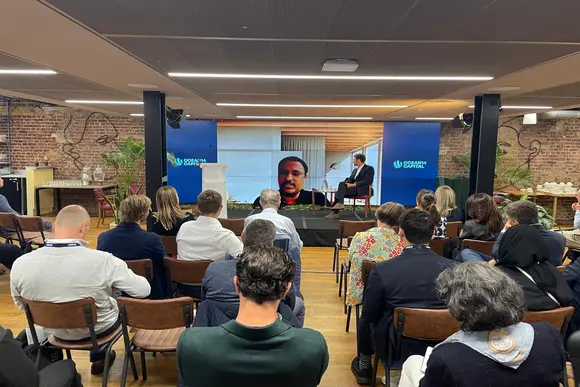
The monthly Teya presentation at 100 Victoria Embankment had two and a half hours to set up, one hour for rehearsal, one hour for the event and one hour to de-rig. Planners often realise how tight that schedule is when it is already too late. By then, the only options may be less suitable equipment, a shortened rehearsal or higher rush charges.
But the booking date is not the whole answer. The better question is how many hours you can get in the room, so confirm load-in, setup and rehearsal times with the venue before you fix the date. This post explains what sets the lead time and how to lock in AV hire in London before the date gets tight.
Why does the AV booking timeline run four to six weeks?
Four to six weeks gives a larger conference what it cannot do without: confirmed kit and crew, agreed venue access and a rehearsal slot. A conference AV booking timeline works backwards from the opening session. Subtract the speaker run-through, the sound checks, the installation and the venue’s load-in window. What is left is the date by which kit and crew must be secured.
Larger events stack requirements. PA, projection or an LED wall, lighting, staging and cameras each add kit, a technician and build time. Define the kit list first, using our complete guide to audio visual equipment if the categories are unfamiliar.
When to book AV for an event therefore depends on the hours you can get in the room. Booked kit without room time is only half a booking.
What changes for smaller meetings and last-minute needs?
Smaller meetings can be booked at shorter notice, and last-minute AV hire is possible, but the choice of kit and crew narrows as the date closes in. Headcount alone does not determine the AV equipment booking timeline. Equipment requirements, crew availability and venue access matter more.
A 36-person meeting at Park Plaza County Hall, the ICESCO-NewGlobe ministerial dialogue, needed 17 delegate microphones, a chairman microphone, two Nexo PS8 speakers, a 65-inch Samsung display and a Canon XF605 camera with an operator.
For the One World Media Awards 2026 at Ham Yard Hotel, EMS Events supplied eight wireless, battery-powered LED PAR cans, preset to the client’s brand pink, as a set-and-leave dry hire with no on-site technician. Installation was scheduled ahead of doors opening at 19:00.
For hybrid events, start at the long end of the range or earlier. A hybrid event is effectively two events at once, and the venue’s internet needs checking in advance. A simple conference stage set takes about two weeks to build; a bespoke set takes longer, while ready-made backdrops and conference sets can be deployed more quickly.
How do venue access and rehearsal time affect booking?
They often set the timeline more than kit availability does, because installation and rehearsal need fixed hours in a room the venue controls. Ask the venue for load-in times, access routes, power and rigging rules, and what else is in the room beforehand.
Peak periods tighten this. Autumn conference season and the weeks before Christmas typically fill popular venues and stretch crew, so lock access first. Book AV equipment in advance of those dates, not alongside them.
The Teya setup shows why. The constraint was the venue, not the kit: the listed building’s floor had to return to cafeteria use within an hour of the event ending. Ask what your venue needs back, and by when.
What happens when you book less than four weeks out?
Choice narrows, rehearsal shrinks and cost pressure rises. Preferred kit is already out. Crew are committed elsewhere. The venue’s best access slot has gone.
Late bookings may attract rush charges, but the final cost depends on the event requirements and should be confirmed through an itemised quote.
The audio visual hire lead time also covers preparation. Kit is tested before it leaves the warehouse. Streamed events need internet speed tests. Major installs need a venue survey. Squeeze the schedule and something gives, usually the run-through with speakers.
That is when a small fault becomes an audience problem: a dead microphone, a slide that will not display, a stream with no audio. Kit can be cross-hired at short notice. Familiarity with your room cannot.
How to confirm availability and lock technicians step by step
Send the full brief, get the kit and crew confirmed in writing, then fix venue access and rehearsal times. These steps turn when to book AV for your event into confirmed dates, and they work the same way for AV hire for corporate events in the UK, whatever the size.
- Send the date, venue, timings, guest numbers, room layout and content types, and say whether you need recording or streaming.
- Ask for the kit list and crew roles to be confirmed against that brief.
- Confirm who sets up, who operates during the event and who de-rigs.
- Agree load-in, rehearsal and de-rig times with the venue.
- For streamed events, book the internet check.
Check which audio visual hire service your package includes, from delivery and set-up to on-site operation and collection. Dry hire and fully crewed packages offer different levels of support.
At four to six weeks, every step fits. Under four weeks, confirm crew and venue access first, then kit.
How EMS Events approaches the AV equipment booking timeline
As Harry explains:
“We once received an enquiry for a 9am event, with setup requested for 7am. For a morning like that, we work backwards from the opening session, allowing time for installation, sound checks and a run-through with the speakers. Each stage helps us get everything ready for the audience, so I always recommend agreeing on venue access and rehearsal timings early.”
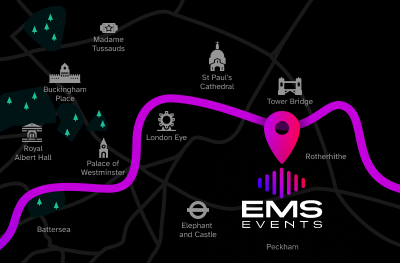
EMS Events operates from an 18,000-square-foot warehouse close to Tower Bridge. With 30+ staff, the team offers AV equipment hire in London as part of event production in London.
Next steps
Start the AV equipment booking timeline from the room, not the kit list. Ask the venue for its access and rehearsal hours first, then book the equipment that fills them.
Before choosing the kit, check the room. Before confirming the date, ask what time you can get in. Before you sign off, confirm who operates on the day. Add the venue’s load-in and rehearsal times to the brief from step 1. When you are ready, request a quote and we will take it from there.
FAQs
How long does AV equipment hire take to arrange?
The booking itself can be quick, but the full process takes weeks for a larger event: quote, kit preparation and testing, transport, installation and rehearsal. Allow four to six weeks for a larger conference. Smaller meetings can be arranged at shorter notice.
How far in advance should I book audio visual services?
Book once the date and venue shortlist exist: four to six weeks ahead for larger conferences. Add time for streamed or hybrid events, which need internet checks and extra kit. Smaller meetings can be booked at shorter notice, but earlier widens your choice.
What AV equipment do I need for a conference?
Most conferences need a PA, microphones, a projector or LED video wall, a presentation laptop and lighting. Add cameras for recording, an encoder for streaming or interpretation booths for multilingual delegates. Room size, audience numbers and content decide the final list.