Skip to content

Choosing AV equipment is only part of planning an event. You also need to decide who will install, test and operate it, and who will respond when technical requirements change.
That is the practical difference between dry hire and AV hire with crew. Dry hire is an equipment-only approach offered by some suppliers, where the organiser provides its own technical team. AV hire with crew combines the equipment with technicians who manage the agreed setup, operation and de-rig.
For organisers who need both equipment and technical support, audio visual hire in London with crew can cover the agreed setup, testing and live operation without placing those responsibilities on the internal event team.
What is dry hire?
Dry hire usually means renting AV equipment without an operating crew from the supplier. Your own technicians, venue team or production partner are responsible for setup, testing, operation and troubleshooting.
The equipment can include microphones, PA systems, screens, lighting or video equipment. This can work well for a production agency or venue that already has competent technicians and only needs additional hardware, so the decision should rest on technical capability rather than price alone.
What does AV hire with crew include?
AV hire with crew includes the equipment and technicians who manage the agreed technical scope. Depending on the event, that can include delivery, setup, system testing, rehearsals, live operation and de-rig.
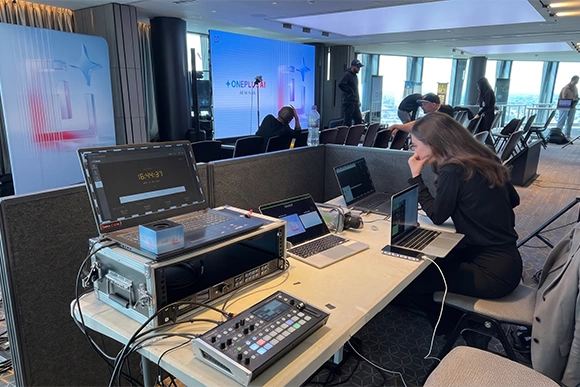
For a conference, technicians may prepare microphones, test presentation laptops, configure screens and check video playback before delegates arrive. During the event, they can monitor sound, manage presentation sources and respond when timings or content change.
EMS Events’ audio visual hire service follows this crew-supported approach, allowing the event team to focus on speakers, guests and content while experienced technicians manage the agreed AV requirements.
Dry hire vs AV hire with crew: what is the difference?
The main difference is where technical responsibility sits. Dry hire places more responsibility on the organiser’s technical team, while AV hire with crew puts the agreed setup and operation on the AV supplier.
| Area | Dry hire | AV hire with crew |
|---|---|---|
| Equipment | Supplied | Supplied |
| Technical crew | Usually not included | Included as agreed |
| Setup and testing | Client team | AV crew |
| Live operation | Client or venue team | AV technicians |
| Troubleshooting | Client technical team | AV crew within agreed scope |
| De-rig | Usually client responsibility | Managed within crew scope |
| Best suited to | Experienced technical teams | Organisers needing technical support |
The equipment-only price may look lower, but the full comparison should also include any technicians, setup time and specialist operation your event still requires.
When is dry hire suitable?
Dry hire is most suitable when experienced technicians are already responsible for the event and understand the equipment being hired. A production agency may have a sound engineer but need additional microphones, while a venue team may require extra screens that it can integrate into an existing setup.
Relevant experience matters because someone who regularly uses a meeting-room projector may not be equipped to manage multiple wireless microphones, presentation switching, video playback or a larger PA system during a live event.
When is AV hire with crew the better option?
AV hire with crew is generally more suitable when the organiser lacks an internal technical team or when several AV systems need active management throughout the event.
A conference may involve several presenters, panel discussions, audience questions, videos and multiple presentation sources. Technicians prepare microphones, monitor sound, manage playback and keep the AV aligned with the running order. Product launches, award ceremonies and hybrid meetings can involve similar demands.
Crew support is also useful when the setup window is limited. Having technicians who already understand the supplied systems reduces the technical coordination the organiser needs to manage between venue access, rehearsals, and the live event.
Is dry hire cheaper than AV hire with crew?
Dry hire often has a lower initial price because supplier crew hours are not included, but the final cost depends on the technical resources you already have.
If your organisation already employs suitable technicians, equipment-only hire can avoid duplicated labour. If it does not, you may still need freelance engineers or specialist support.
Before approving a quote, check the crew hours, setup and rehearsal time, overtime terms, venue requirements and what happens if the schedule changes. These are some of the most important questions to ask an AV company before signing the contract, especially when two quotes include different levels of technical support.
The same scope-first approach applies across other equipment, as our list of red flags when comparing LED video wall quotes shows.
How do you decide which option you need?
The decision should start with the technical capability already available within your event team. Dry hire suits an event where experienced technicians are already responsible for setup and operation, while AV hire with crew is more appropriate when the supplier needs to provide that expertise.
Event size alone should not decide it. A smaller executive meeting with remote speakers, several microphones and presentation switching can require more technical management than a larger event using one screen and a straightforward PA system.
The complexity of the content also matters. If speakers are changing microphones, presentations are coming from several laptops or videos need to play at specific points in the running order, an AV technician has an active role throughout the event rather than simply completing the setup.
What does the AV crew handle?
The AV crew turns the equipment specification into a working setup. Before guests arrive, technicians can install the agreed systems, position microphones and speakers, connect presentation sources and test playback.
During rehearsals and the live event, they monitor the systems, follow agreed cues and respond when content or timings change. Afterwards, the crew manages the agreed de-rig. A recent example is the technical crew and onsite technician support EMS Events provided for the London Borough of Hackney’s Windrush Day 2026 ceremony at Hackney Town Hall.
This does not mean AV hire with crew is the same as full event production. AV hire focuses on the equipment and technical support included in the agreed scope, while full production brings together wider technical and production elements.
When the brief expands beyond equipment and technicians to include staging, lighting, rehearsals, content coordination, and live cues, it becomes important to understand the difference between AV hire and full event production, as the event may now require broader production management rather than AV support alone.
What should you tell your AV company before booking?
A useful AV brief should explain what needs to happen during the event, not just list equipment. Share the date, venue, audience numbers, room layout, running order, number of speakers, presentation requirements, panel sessions, audience Q&A, video playback and any recording or streaming requirements.
Include rehearsal and venue access times because they affect crew planning. For larger conferences, EMS Events recommends starting AV planning around four to six weeks ahead where possible. Crew availability, venue access, and rehearsal requirements all affect how far in advance you need to book AV equipment, which is why larger conferences usually need earlier technical planning than a typical corporate meeting.
Giving the AV company this information early also helps prevent over-specifying equipment. The technical recommendation can then be based on what the audience will actually see and hear rather than on a generic equipment list.
Dry hire or AV hire with crew: which should you choose?
The right choice depends on who is qualified and available to take responsibility for the AV throughout the event. If an experienced technical team is already in place, dry hire can fit that structure because your own technicians remain responsible for setup and operation.
If that expertise isn’t available internally, AV hire with crew provides the equipment and the technical staff needed to support it. EMS Events provides this crew-supported approach for conferences, award ceremonies, corporate meetings, product launches and other events across London.
With more than 25 years of experience in AV and event production, EMS Events supports its services with an in-house technical team rather than relying on organisers to operate the equipment themselves. Send the team your venue, date, timings and technical requirements, or call 0207 820 9000 to discuss the AV equipment and crew your event requires.
FAQs
What is the main difference between dry hire and AV hire with crew?
Dry hire generally provides equipment without an operating crew, leaving your own technical team responsible for setup and operation. AV hire with crew includes technicians who manage the agreed equipment, testing and event-day technical requirements.
Does EMS Events provide dry hire?
Yes, where an experienced in-house or venue team will set up and operate the equipment. EMS Events supplied set-and-leave lighting with no on-site technician for the One World Media Awards 2026. For events with live speakers, presentation switching or several systems, AV hire with crew is usually the safer choice, because the equipment and the people responsible for it are planned together.
Is AV hire with crew more expensive than dry hire?
The quoted price is generally higher because technical labour is included. Dry hire only offers a lower total cost when suitable technicians are already available, so compare the full scope rather than the equipment rate alone.
Do small corporate events need AV technicians?
Not every small event requires the same support. Multiple microphones, remote speakers, video playback or presentation switching can still require an experienced technician even when the audience is relatively small.
What information does an AV company need before quoting?
Provide the event date, venue, timings, audience numbers, room layout, speaker requirements and the types of content being presented. You should also mention recording, streaming, audience Q&A and rehearsal requirements so the equipment and crew can be specified accurately.
Is AV hire with crew the same as full event production?
No. AV hire with crew covers the audiovisual equipment and agreed technical support. Full event production has a wider scope that can include staging, technical planning, rehearsals, content coordination and live show delivery.